Tuesday, 27 May 2025

A Brief History of French Animation

France is an interesting country for many reasons but in regards to the one thing we care about: manga and anime it is a particularly a noteworthy nation. Part of this is because of the status animation has held in France historically. France was one the pioneering nations in the through the works of Emile Reynaud, Emile Cohl and others. These figures alongside others like Blackton where pivotal to the development of forms of animation in the late 19th and early 20th century. Working in animation back in those early days involved not only drawing but inventing and crafting new devices and methods to project images in a sequence to mimic motion to the audience in a way that had not been done before. 


At the beginning of 20th century, animation was developed used in short films and in adverts. Emile Reynaud and Emile Cohl who were pioneer of animation at the time, were both driven by their passion and artistic desire, which meant their works were often experimental. This caused them to not really find commercial success, and besides there was not enough money to be made in the industry at this infant stage. Consequently, whilst Emile Reynaud and Emile Cohl are acknowledged as pioneers of animation, the financial return from their works were meagre and in the end, both died in poverty. 

Their legacy was not forgotten but they did not help themselves in regards to that, Reynaud actually threw most of his works in the Seine river which meant many did not survive. However, their methods and inventions were formed the basis for the development of new animation techniques both in France and in the United States. The United States emerges in this period through its own pioneering animators but they were helped by Cohl, who moved to the United States in 1910s to work with Eclair a French studio there. In there, he would produce a series title The Newlyweds that would be the first animated product to be called an animated cartoon. 

© Eclair New York The Newlyweds

Cohl's animation techiniques were built upon and animation in the United States became increasingly commercialized in a way that it did not in France. First, animation studios became bigger and whilst it began with adaptation of strips, they soon developed their own characters.  French's animation continued to hold a distinct production style that involved small niche studios that produced animation mostly in the form of adverts and short films as an artistic endeavor. Animation as an art continued to hold sway in France, animation techniques did develop and the introduction of sound added many new elements for animators to put into their animated products. However, the small studios structure in France still lived off adverts as even short animated films often were often costly to create, so whilst iconic animation projects in France emerged in this period like The Little Solder, Blue Beard and The Tale of The Fox most did not result in much profit for their creators. 


The Little Soldier directed by Grimault

In the 1950s, Disney continued to grow into a powerhouse when it came to commercial animation . , American cartoons expanded around the world supported by the postwar economic boom with Disney at the forefront. In France, animation was at crossroads, in this period of uncertainty and from this period a few figures stood out within France's animation industry. One such figure was Grimault that had founded his own studio in the 30s and in his leadership they produced many animated works through the 40s and 50s onwards. However, many of those works were still mostly shorts which did not provide much return on investment. When it came to full feature length films, the cost was major problem but Grimault managed to produce one of the most iconic works in french animation The King and the Mockingbird. The production of the film was riddled with issues, it became such an issue that even thought Grimault and his studio Les Gemeaux started working on it in 1948, it was shown unfinished in 1952 against Grimault's wishes. This led to a break down in the relationship between the studio and its producers that ultimately caused Les Gemeaux to go under in 1958. 

The imbroglio between the Grimault and the producers was only resolved years after, and then Grimault, who had significantly reduced his role in animation was finally able to remake and finish the film and release it in 1980. The King and The Mocking bird immediately become a classic of French animation not only due to its satirical and highly fantastical story telling but also its animation. It would come to influence many animators but whilst it has achieved a classic status, it was not a big commercial success. However, it did become a crowning piece in Grimault's large portfolio of animated works. 

In the period of Les Gemeux prominence in French animation, the same old question the industry faced still remained. It continued to struggle between a pursuit of an artistic endeavor and the reluctance to draw much influence from hugely commercialized American cartoons. One reason for this was that French animation continued to be focused on short films with the occasional feature film that gave space for more experimental works. It did mean that the largest amount of animation produced from the 50s onwards were television cartoons largely from the United States. Part of this reluctance to be drawn by the United States was expressed by Grimault and other animators belief that France should stay true to its own style of animation instead of drawing too much of the style prominent in the United States, specifically Disney's style that felt uninspiring to them. 

Others animators emerged after the period of Grimault's studio preminence, like Laguione and Laloux that navigated in the animation industry through the 70s and 80s, which was in many ways a period of great animated works in large parts due to the works of the two men. First off Laguione was inspired by Grimault and amongst other french animators, he in particular stood out for his subtle story telling in his short films , most notably The Lady and The Cellist and Rowing Across the Atlantic, both would be awarded in the film festivals that were becoming more prominent across the globe. 

It was only in the 80s that Laguione would release his first feature film Gwen, or The Book of Sand in 1985. Gwen was an epic science fantasy tale that not only stood out for its animation but also because of its storytelling that relied significantly on visual cues. Critics praised the film and it won awards but it found limited commercial success. 


Gwen, or The Book of Sand 

Rene Laloux story is quite similar to Laguione,  he started off his career with short animated films as well.  However, his career dated at least to the 50s which was at least 10 or so years before Laguione.  This earlier debut allowed him to actually have experience of working with Grimault's and his studio with in the 50s in many short animated pieces. One of those short animated pieces was Monkey's Teeth, which Laloux based on the pictures drawn by the people in the psychiatric warden he worked in at the time. It was a rather peculiar project, but this highly experimental style would become a known trait for Laloux works. Fantastic Planet his first and most well known feature film done alongside a czech studio is a science fantasy works but with a setting and story telling that is imbued with allegories and psychedelic elements. 

Both Laloux and Laguione provided excellent animated works in the 60s, 70s and 80s, both also tried to shift to create animated works that could be commercially successful. However, they still tried their utmost to avoid many commercial animation cliches, many of which came from what they would call Disney 'Demagoguery.' In a sense, they tried to bring out animated works in France from outside the arthouses but at the time still trying to define their own style against the major international competition and conventions. 

The animation industry seemed capable of releasing critically acclaimed works that found mild commercial success. However, international competition only grew stiffer with the introduction of cheap Japanese animation and the continued presence of American cartoons within the midst of it all. Japanese animation emerged in the international market with adaptations of western works like Moomin, Heldi in the Alps and many others during the 70s and 80s. This stiffer competition in the animated market and the prominence of feature American films in the international market heightened a sense of fear in France and Europe of Americanization threatening their culture. France in particular that has always been protective of its culture had to think of ways to protect its creative industries.

One of the solutions to the issue was a European wide plan was policies to protect national cultural industry. In France, this was had a direct effect on the growing animation within the country from the 90s onwards when the policies first emerged.  A prominent animator that would emerge in this period was Michel Ocelot, who would release the popular and critically acclaimed Kirikou and the Sorceress.

During this period many other critically acclaimed films like The Triples of Belleville, Rain Children, Raining Cats and Frogs. These films whilst their revenue was measly when compared to American titles, due to lower costs less revenue was needed for them to be profitable. This trend has continued and animation production has increased in France to the level that it has become the third biggest producer of animated feature films closing in on Japan and the United States. When it comes to animation in total Japan is ahead by a large margin due to its television animated series, but like in most cases production does not take into account the large amount of outsourcing involved in animation that has meant South Korea for instance is the largest supplier of animation in the world. 


The Triplets of Belleville

This growth of French animation not only came from the policies of protection but also investment in its creative industries, which included animation. It also originates from the continued tradition in France that was formed in the early 20th century that its animation has to have its own identity. All these elements with the talented animators like Laguione, Ocelot, Chonet and others that continue to pump out unique animated works helped France to become the standout country for the animation industry within Europe. Television animated series still do not have the sort of identity that feature films have in France, but they have come to produce many works as well, and streaming services like Netflix also expanded options for studios in France which have resulted in shows like Arcane.

Small Thoughts on Recent New Series


'Mamori Kyoudai no Sahanji' was the first series to start, and I was upbeat about its chance for success going by its popularity in Champion Cross. My thoughts on the series continue to be mostly positive, it is a light comedy series with a range of characters that give it some diversity. The characters and their interaction are not enough hold my attention which is why I stopped reading. It is not a bad series but it does not seem to be as popular as I previously expected and I reckon this will eventually leave the magazine and continue on Champion Cross.  

The second 'Davre no Oukan' series has already ended but it was not a bad series in my eyes. Artwise it was probably the most polished of the round, but it was likely the blandest. The series itself was a comedy action series. Its main problem ended up being how it failed to leave any impression. This was a result for me largely because it was too much of a mixture of comedy and action and it did not fully commit to either side. There have been comedy action series but they have prioritised one genre over the other. Perhaps with a more interesting setting and a clearer idea of what to focus on this mangaka can find success be it in Champion or elsewhere.  

The third series was 'Kimi wa Yotsuba no Clover by Koushi' and the most successful recent series. It has received a TV recommendation and it has received lead colour pages to promote volumer releases. The success of the series stems from its interesting setting even if not innovative. It has a twist that whilst not necessarily unpredictable adds a sense of mystery to the series and builds up the main female character intentions. The level of popularity of this series might motivate editors to look for series with intriguing setting like it, which might inspire the magazine to a new direction.  

The last series is Mogaku by Gumi and Maru was the one I favoured the most. The reason for my favour was that it resembled a nostalgic type of sports manga that had protagonist that were not talented but worked really hard to compete with others. The story likes to use emotional beats especially backstories to not only acts as extra motivation for their career in racing but builds up their character. It blends these emotional moments with sketchy art racing sequences that are feel intense. However, the series has not found a significant level of popularity. Perhaps, the series needs to balance those moments with the character interaction that break up the intense pace. More interaction between characters, especially since many have their own motivation for racing can engage readers into the actual story outside of the intense racing. 

Tuesday, 17 September 2024

The Origin of the Popularity of Manga in France

When the anime adaptation of Radiant was announced it was quite a novel and perhaps surprising piece of news for many anime fans. It was not the first time a French work was adapted into anime, French and many foreign works were animated by Japanese studios in the 70s and 80s. However, it was the first time for a manfra. 

Manfra is the term used to refer to French comics inspired by Japanese manga and there are many of them published in France alongside the vast amount of translated Japanese manga series that are released in the country.  Manga sales in France have been in steadily growing since the start of the century. but what is the reason for this? I will explore this in this second video of a series about comics and animation from France. 

Bravest Journey, A French comic heavily influenced by Japanese manga style

One of the reasons manga could find such a fertile ground for fans was because comics have had a deep history in France. Part of this history was how comics were accepted as a form of storytelling that not only had popular cultural value but also value as a piece of literature. In order to see how this happened we have to start with the rise of bande dessinees or comics in France and Belgium.

Bande dessinees popularity in France was like a wave with its up and downs through the 20th century. However, it gradually managed to make a lasting impression in the French imagination and successfully become a cultural element that was worth protection by the authorities. Support for the industry coming in the 80s helped the industry that had been on a high but was on a period of transition, to stabilize in the short term and thrive in the long term. The acceptance of comics by the French did make it prime market for the series coming from Japan and the spread of anime in France was the initial seed for the emergence of a thriving manga market. 

France is not stranger to animation, in fact notable Frenchmen were pioneers in the art form of animation. However,  what Japan grew to thrive from the 70s onwards was a sort of animation that was not that represented inside France. TV animated series of various series based on western works started to be animated by Japan producers and shown back in France, and since these shows were relatively cheap and well done it meant local alternatives struggled to compete.  


Amongst such series in the late 70s and early 80s were Albator, Tom Sawyer, Cobra and many others. Spearheading the spread of these series was the programing aimed children like Recre A2. Recre A2 was a weekly show that aired on Wednesday and it featured sketches in-between episodes of animated series or seitai series. More shows like it would emerge later on but the most popular and notable was Club Dorothee named after the presenter of the show. Club Dorothee that from the late 80s brought to French television many popular Japanese shows like Saint Seiya, Dragon Ball, Dragon Ball Z, Ranma 1/2, Sailor Moon and many more. 


The popularity of the anime series did not go unnoticed and a window of opportunity emerged in France for publishers of Bande Dessinees (French comics) but also other publishers to focus solely on manga to emerge. These publishers brought from Japan many titles and France soon stood out as a market for manga in Europe . At this time in the 90s, 2000s the Italian market was the biggest market when it came to the sheer number of Japanese titles licensed there. France was close behind, but what within the timeframe from late 2000s to now France overtook Italy and created a massive gap and firmly established itself as the biggest market for manga in Europe. 

The rise of France as comics market was driven by its cultural acceptance of comics as a respectful form of storytelling. it is referred to the ninth art. In recent times, comics have continued to grow in France, with manga being a great driver reason for that growth. It seems the generation that grew with anime in the 80s and 90s in French TV was cultivated back into anime fandom in the current animation boom. Naturally, the original work of many anime are manga series that see them turned into anime, but it seems increasingly French readers get into the manga before the anime. 

Manga sales have since the 2000s spiked in France, the increasing sales numbers have led to publishers expanding their portfolio of licensed works. The sale number have have become quite impressive even in comparison to sales in Japan in regards to some series. A natural result of the sales numbers has been publishers in France looking for authors be them Japanese or not, to draw series that they feel will be popular in France. In a quite interesting turn of events, some of those series gathered enough popularity in France to draw attention of publishers in Japan. So these series influenced by manga are published in France, but Japanese publishers pick them to publish them back in Japan. Some of notable series that made that journey are Lost Children and Outsiders and others. 

Wednesday, 21 August 2024

Status of The New Champion Series

It has been a few weeks since the series begun and all of them had a few chapters published in Champion Cross. 

I will analyse theirs number in Champion Cross and give some of my thoughts on the series so far. , but at the moment of writing these are the numbers and it might suggests which series will survive in the long term. Overall, I imagine all series will receive a promo in Champion Cross for volume releases which could help some to break out. 

Tuesday, 16 July 2024

Champion Cross - The future of Champion


Champion Cross is the new digital manga publication website of Akita Shoten that replaces Manga Cross. It is not only a replacement however, it is acts as a comprehensive digital platform that looks more like a version of Piccoma for Akita Shoten series. It demonstrates an ambitious and calculated action by Akita Shoten to expand its digital efforts. 

What is Piccoma?

Piccoma is a digital platform that has found massive success in Japan, especially due to Korean series. The platform acts as digital storefront with many offerings from Japanese series to Korean ones. However, its main success originates from its monetisation system. In the Piccoma system, chapters are published weekly but whilst people can read the first three or so chapter for free, after that there is a limit on chapters that can be read for free. However, the limit can be bypassed by waiting, if you can not wait, then you can simply pay. It is referred to the free if you wait monetisation model. It is a simple monetisation method but one that had proven successful in Korea where Kakao the organisation behind Piccoma made large profits  (Yecies and Shim, 2021).

The main benefits of the free if you wait monetisation model is that lowers the barrier for reading for people that are unsure if they want to pay and it gives the option to wait to continue reading. By giving the chance for people to read for free, readers can free trial a series and if they eventually are hooked and can not wait to read the next development they are likely to pay. It does mean that every user is not equal, because it allows for whaling as some people are likely to spend a lot if they have the disposable income to avoid waiting to read. On the other hand, some without the same amount of money to spend might wait and read the same chapters someone else paid to read for free. 

Champion Cross uses the same free if you wait monetisation model and the fact you can technically read everything for free is one of the main slogan used to promote the platform. To make it easier lets compare it to Manga Cross, in MC every series had its first three chapters available to read for free as well as the latest three or so chapters. The chapters in between the first few and the latest released chapters were not available to read on the website. Hence, a series like The Dangers in My Heart with over 100 chapters published had only six chapters available to read on the platform whilst the chapters in-between that a lot of chapters were inaccessible. Any new users that were interested in reading the series on the website would find that they could not read it there, instead they had to turn to the collected volumes either digitally or physical to continue reading. Moving users from MC to a platform to purchase a volume only serves to reduce the potential of that users making a purchase as they are likely to not bother doing it later. So as a result many potential people that would continue reading if those chapters were available read the free chapters but left it at that. 

In Champion Cross this issue was addressed by turning to a Piccoma inspired system. The first few chapters are free to read with the others being also free if you wait a day, if not you can use a ticket or pay for it. Immediately it addresses the question of middle chapters in Manga Cross that effectively forced people to turn to volumes, now they can stay in Champion Cross and read the whole series 'for free.' It takes away the likely failed incentive for users to buy volumes, and it monetises the series to create a new revenue stream for the digital platform. The potential revenue from the free if you wait system is likely to outweigh the amount from volume sales in the long run anyway, so even if it costs volume sales in the short term it is likely not going to impact the financials of the company substantially. 

What are these tickets that I keep mentioning? They are tickets that allow you to skip the wait, and they are not for sale but they can be earned through missions. Missions are like actions that if you complete, you gain a ticket, and they can include reading a chapter everyday, reading a series and leaving a like. It works as a interesting loop where people engaging with series in the platform are rewarded for continuing to do so. 

Missions
Missions

Another interesting feature that work to drive engagement is a daily gacha where a ticket can be gained, and two if you share it on X. It works to add an element of gamifying that platform, and these game like features are not by chance, they have a proven track record in marketing research for driving up engagement(itrián and Catalán, 2021). In engaging with the platform and reading titles, inevitably despite users being able to read for free, research on monetisation systems on users waiting does suggest many will spend to forego waiting (Raman and Leyton-Brown, 2024).

The Gacha
The daily gacha

Of course to engage users, it has to first have users. So what does it do to make join the platform? A newly registered users receives 10 tickets of the get go, and they can gain more tickets through completing tutorial missions that introduce them to the system and rewarded them for liking and sharing series. So, if a new users is hooked on as series they like with the tickets available to them they can read quite a few chapters. However, after they are hooked they are likely to fall into the gacha and mission loop and continue to engage with the platform. So the tutorial and initial user awards work alongside the mission system alongside the tickets to get people engaging with the platform with the ultimate goal of leading users to spending. It seems promising, and I believe it will be successful. 

Image from the tutorial page that explains how it works.
Image taken from tutorial page that explains how the site works

So lets move on to the lineup since if the series are not good the readers will not bother. 

The main change of Champion Cross from Manga Cross is that it is no longer simply a digital platform for publishing series. It now includes all series currently published by Akita Shoten as well as some older titles. I had in a previous post mentioned the need for more resources and more series to be available in the digital platform and this is the best answer possible. Instead of pushing out a whole bunch of new series in a revamp, Akita Shoten made the best move possible which was to add series from many of its magazines as well as completed titles. So Manga Cross that had one or two series per day, now as Champion Cross has many series releasing new chapters everyday. In addition, there are many completed titles that can be fully read like the Baki prequels, Shuujin Riku, Beastars, Bachi Bachi and many others. It now has a lot to offer and many series for people to check out that makes it alongside all the features does make me confident that this is inevitably going to replace the manga magazines as it starts to bring more profits and the magazines less. 

You might have noticed that I did not say series from all their magazines and that is because series from Young Champion did not come to Champion Cross. It went instead to a platform that is exactly the same as Champion Cross but is called Young Champion Web. It is a peculiar move but is likely driven by the sexual nature of the content of most of the Young Champion series. Some Young Champion series that are more palpable for all ages are in Champion Cross, so I definitely believe that the adult content was the reason behind the split. 

There are other questions over the platform that I hope to explore in other posts. If you have any suggestions of things to talk about place them down in the comments down below

Reference - 

Bitrián, P., Buil, I. and Catalán, S., 2021. Enhancing user engagement: The role of gamification in mobile apps. Journal of Business Research, 132, pp.170-185.

Lundy, T., Raman, N., Fu, H. and Leyton-Brown, K., 2024, "Pay to (Not) Play: Monetizing Impatience in Mobile Games." Proceedings of the AAAI Conference on Artificial Intelligence 38(9), pp.9856-9864.

Yecies, B. and Shim, A.G., 2021. South Korea's webtooniverse and the digital comic revolution. Lanham: Rowman & Littlefield.


Sunday, 30 June 2024

Saint Seiya Next Dimension Ends after 18 years. New Heaven Arc Series Expected?

Anime and new series can be expected? 


Kurumada is finally finishing 'Saint Seiya Next Dimension' that began back in 2006 when the series first begun in Weekly Shonen Champion. After 18 years and 118 chapters, the sequel to the classic shonen series from the 80s will end. Lets go over its journey to Champion from Jump and a few interesting tidbits.

The original series 'Saint Seiya' was not published in Weekly Shonen Champion, it was instead serialised in Weekly Shonen Jump from 1985 to 1990. It was not Kurumada's first work, he was a known property for his previous work 'Ring ni Kakero'  at the time but it eventually became his most known work.

 The series itself is focused on knights (saints) that receives armors (called cloths) and that represent all sorts of constellation. The main cast are all bronze knights that fight for Athena, with Seiya the titular character having the Pegasus cloth. The first arc usually called the Galaxian Wars arc sets up the main cast and introduces the main tenets of the series. However, what everyone might know about the series likely comes from the second main arc the Sanctuary arc that was focuses on the Bronze knights having to overcome the Gold knights, that each represent a sign of the zodiac, within quite a limited timeframe. Considering that the Gold knights are supposed to be the strongest knights of Athena, you can see the challenge of the task and the stakes are high as well. 

The original anime series that aired through the late 80s, after the Sanctuary arc added an Asgard anime only arc then it covered the Poseidon arc, but it did not cover the Hades arc that wrapped up the original series. The Hades arc was later animated in the 2000s in a new anime series that finally saw that the entire original Saint Seiya series was completely animated. Later arcs did not seem to reach the same status as the Sanctuary arc which was so iconic that many casual fans believe it to be the end of the series.

The anime adaptation of the series made its way around the globe especially with dubbed versions. In my home country it was a popular show in the 90s and it is one of the few anime that my parents can recognise. It established strong multimedia presence especially internationally in Spanish speaking areas and in China as well that has meant that despite times of sparse animation projects, it has continued receiving games, figurines and other merchandise products.

After the original anime from the 80s and the manga series ended, the series entered a period of slumber in terms of new content. The slumber came to an end in the 2002 with the start of the anime series covering the Hades Arc, and the start of an all new manga series called 'Saint Seiya Episode G' however this time Kuramada was only overseeing it, handling the series was Megumu Okada in the magazine Champion Red. The series was a spin off series that acted as a prequel to the original series that focused on the gold knights. It was the first time Saint Seiya as a series was published in a magazine other than Jump and by a publisher other than Shueisha. The main driver behind the new series was Sawa the head editor in charge of the creation of Champion Red in 2002 that was familiar with Kurumada, who still had many ideas for Saint Seiya and was convinced to launch a spin off series in the magazine as one of the series for its starting lineup. 

Sawa eventually became the head editor of Weekly Shonen Champion in 2005 and not long after he took over the magazine together with Kurumada a sequel of the original Saint Seiya manga that had ended in 1990 that as we know is 'Saint Seiya Next Dimension Meio Shinwa' was launched. The series act as continuation of the Hades arc that ended in a cliffhanger per say. However, soon after its debut the series became a irregular series that was published chapters in batches that were referred as seasons. With the latest season, the manga officially ends with chapter 118 in a few days. 

118 chapters in 18 years is quite a slow pace, however this is likely due to Kuramada's other projects and many spin offs  that he at the very least act as overseer as the author of the original work. This include the continuation of 'Saint Seiya Episode G' that is currently on its second sequel with the title 'Saint Seiya Episode G Requiem'. Another series notable spin off series was 'Saint Seiya The Lost Canvas' that ran in Weekly Shonen Champion from 2006 to 2011. Shiori Teshirogi drew the series, and it was the only spin off series to be animated until' Saint Seiya Santia Sho' by Chimaki Kuori was in 2018. 

Two other spin offs started in recent years one is Saint Seiya Dark Wing by Kenji Sato and Shinshu Ueda that explores the isekai trend using Saint Seiya. The other is Rerise of Poseidon by Suda Tsunagami which mimics closely Kuramada artstyle, both are interesting projects for fans of the series. 

Champion spin offs of Saint Seiya

Saint Seiya Episode G Saga - 2002 - ongoing

Saint Seiya The Lost Canvas - 2006 - 2011

Saint Seiya Santia Sho - 2013 - 2021

Saint Seiya Dark Wing - 2020 - ongoing

Saint Seiya Rerise of Poseidon - 2022 - ongoing

Does the end of Saint Seiya Next Dimension spell the end of the series? 

The end of the Saint Seiya Next Dimension was expected so there was no surprise that this was the last season, but with the end many news are expected as anticipated by comments from Kuramada earlier in the year in a comment in Champion Red. It is his 50th anniversary as a manga author after all, so I do not believe anticipating announcements from his biggest ongoing project is too much . One such announcement is likely to be a new featuring the Heaven arc that involves the Gods in the Olympus against Athena. Notably the preview of the issue whilst it does say Saint Seiya Next Dimensino will be in the cover for its last chapter does not state anything about announcements, but we can only wait and see.  

Many rumours and insiders in the Saint Seiya community expect an announcement of an animation for Next Dimension to happen as well not necessarily in the upcoming issue but by the end of the year, and it would make a lot of sense alongside the release of a final edition which is marketed as the best edition with revision on cloth designs and text by Kuramada himself and to my knowledge it is the first time the original series was published by Akita Shoten. For potential new fans it is readily available for readers to read back to prepare for the animation of the direct sequel. 

An animation for Next Dimension by Toei has always been a question. It should not be forgotten that the series is a multimedia success that is featured prominently in their financial statements. It has been a series with great returns for Toei especially internationally despite the absence of many animation projects. The slow pace of release of the series might have been an impediment to an interest in animating it by the studio but with its completion the series can be animated without worry of running short on content due to releases. 

Thursday, 27 June 2024

New Serialisation Round


A new serialisation round is starting in WSC and it is really the first real round under the new editor in chief Matsuyama.  There have been new series before this one namely the V tuber collab project called 'Shiranai Kenykuubu' or Shiraken for short and 'They want to Fill in the Holes' that began in issue 6 and 13 respectively, with the former seeing what seems to be a good levels of sales whilst the latter has not had a volume released yet.

Shiraken was likely planned before the editorial shakeup at the end of last year, so the first series of this new editorial makeup most likely was the romance comedy title 'They Want to Fill in the Holes.' The series seems quite to lean heavily on ecchi that seems a bit out of touch with what romcom audiences seem to favour at the moment, and even thought the art especially coloured does have a nice touch to it in my eyes, the series overall is quite bland.

Moving on to the actual topic of discussion, we have the upcoming new series round and the first one under the new editorial department. 

The first one is 'Mamori Kyoudai no Sahanji' by Kuranto Yukiaki and Itonoko already started and it is based on a oneshot of the same name that was published only a few months ago in issue 16. The fast turnaround to serialisation likely means it was a popular one-shot with readers. It is a comedy series focusing on three brothers with a focus on the youngest brother that is an ordinary high schooler whilst his older brothers, one is a popular comedian and the other a super idol. It does feel like it a series aimed at a female audience, in a way it reminds me of Tanaka is Always Listless. I expect this series to be successful due to the one-shot success. 

The second 'Davul no Oukan' by Todoroki Akira begins in Issue 31 and it is not based on any previously published one-shot. The description seems to suggest it is focused on the life of the strongest former assassin and it will be an violent action series. From the author side not much can be drawn from either, Todoroki Akira is not someone that has published before in the magazine before or won any rookie awards but the possibility exists that they could have changed their penname. Overall, its a wait and see.

The third series is 'Kimi wa Yotsuba no Clover by Koushi' and it begins in Issue 33. Koushi is an author that has already published series previously including for Akita Shoten in Manga Cross (now Champion Cross) named Isekai Saikyou, Nihon de JK to Konkatsu suru' that ended with three volumes last year. They had another series in 2022 that ended with three volumes with only digital release. The things to take from the previous titles they published was that they were both isekai stories largely focused on comedy with a romantic edge. In this new series the motif is the four leaf clover, and the description talks about fortune and destiny and dubs the series a 'love suspense'. It would be move away from their previous works that were comedy focused series. 

The last series is Mogaku by Gumi and Maru and it begins in issue 34. Gumi and Maru is now an artist and author separate but they won the 16th Next Champion Award as Gumimaru under one name as a duo. The one-shot that won the award 'Sekitoba' that was published in issue 10 this year. The fact the series is inspired by a one-shot, suggest it was quite popular. In fact its the first Next Champion winning one-shot to become a series. Going back to the authors, the two are actually childhood friends who wanted to become manga author, well they got published... not it is whether it succeeds.

The series is a track cycling racing (Keirin) series where the main character is betting his life for his family. In the one-shot the main character's father was a cyclist but he passed away and because it seems he was the main earner, it left the family on hard times and it becomes even worse after his mother has an accident. So as the eldest brother, he has to take up the burden of breadwinner and through Keirin to be able to support his family. It is an interesting setting, economic difficulties is not an usual motivation in sports manga nowadays, but it can act as a real rather than a bland motivator that underpins the main character personality. 

Well that is the round.. 

Thursday, 22 December 2022

Black Clover vs MHA - Comparison of the First Chapter


My Hero Academia is a popular shounen manga, but I believe its first chapter highlights some of the issues I see in shounen manga. What strikes me at first is how in the initial first page the author feels the need to tell the audience about the setting. It not only tells you about the setting but gives some explanation for it, in this case it says the age of heroes started after the sudden appearance of people with quirks, special abilities people started to be born with.

The problem for me in this instance is that these elements are all simply told to the audience in the first pages of the series, it feels so superficial that it hardly leaves any impression. It is a shoddy and honestly infantilizing way to set up the world within the series.

It also introduces the character poorly, the first look of the main character is him getting bullied by other kids with super abilities because he seems to be standing up for another student even though he is called quirkless. I do not dislike that initial introduction, but within the same chapter it explains what quirks are and why he is quirkless. The fact there is no real mystery about quirks or questions surrounding them quickly makes it feel like just a way to just set up the superhero world. It also doubles as a way to make the main character an underdog since in a world full of heroes, he has no special ability to speak of. It just feels too much like a device and not an element of the story.

However, why does he want to be a superhero? That is not given much thought over, it seems like it comes from what is displayed briefly in panels showing his childhood idolization of superheroes... It is quite a shallow way to build the main character's main motivation that is supposed to move the story forward. Perhaps, it might have been better to actually develop this, because otherwise once again it feels like an element to get the story going. Its basically to do this story, we need the main character to want to be a hero. In addition, his lack of any special ability makes the task to become here a lot tougher but that is the story... until he is given one? The fact he is given one does downplay his underdog status, which seems a bit counterintuitive in my eyes.

For me the problem is that this is such a poor start to the narrative. It is using a 'tell everything' form of storytelling in a visual medium that is awkward but ever present in shounen manga. For instance, why does the series need to explain in the first chapter that quirks started to appear which eventually led to a world of heroes? You can see that its a world full of heroes, you do not need to deliver that sort of information in the first few pages of the series... Exposition has been fed over time otherwise it feels just like simply the author's explanation for why the series has the setting. In general what this means is that in general the world the series takes place lacks any real depth. It seems like a template world of shonen battle manga but with a superhero makeover.

Black Clover has similar problems in its first chapter but let's go through the chapter together. The first chapter of Black Clover starts the story by narrating the defeat of an unknown mage that came to be called the Wizard King. Back in the present we see the celebration of the return of someone that is called the Wizard King. In the following page we see the celebrations from a place outside the city and two men working in fields comment on the rowdiness of the celebrations and say that the kingdom exists due to the generations of Wizard King that have protected them.

Then we are introduced to the main character, Asta, who talks about challenging Yuno, his friend, which serves as an obviously contrived way to tell the audience is not able to use magic. It also showcases that Asta and Yuno were left at the front of a church on the same day. Subsequently, there is an event that comes out of nowhere where 15 year old people receive their grimoires and Yuno receives his and Asta does not. However, after this another strikingly obvious contrived event happens when Yuno is attacked by someone that wants to rob his grimoire to sell it. The idea that there would be a black market of grimoire for the rich is believable, but I doubt the author thought of this as a macro event to hint at the inequality in the world that he could later develop... spoiler he does not.

A despondent Asta sees the attack on Yuno and tries to save him. After getting a beating by the robber he suddenly receives a black grimoire and a large blade that seems to annul magic, so he uses it to fight the man...

The way it starts off with a tale of the past is much more interesting than My Hero Academia. It has this battle which highlights this mage that defeated the demon who became the Wizard King. In the following page the author uses the celebrations and the perhaps awkward exchange between farmers to show the prestige and role of the position. I believe saying the demon was defeated was unnecessary,, it would have made the demon skull page a lot more impactful if that was what told the audience of the result of the battle. However, these first few pages do give a general understanding of what the title wizard king means without spelling it out... It is basically an army general, so not really a king.

After this the introduction of Asta and how we learn of his inability to use magic is mostly comical. However, his inability to use magic is shown to be notable which means magic use is quite widespread. That made me curious about how magic works, but all we are hinted at is that at Asta's age not being able to use is a strange which reinforces that being able to use magic is natural. It also says that grimoires are not necessary to use magic but they strengthen it which is less interesting, but it has its own implications... In a fight it might not be a bad idea to target the grimoire, because if they can be robbed from someone they are not naturally attached or an ethereal thing. I wonder if the author thought about this when he did that... Let's get back on topic.

We are also told Asta wants to become the Wizard King, which explains why the author decided to start with what exactly the title of Wizard King means earlier in the chapter. The audience does not know his motivations since they are not really shown, at least not in any serious way, so are we supposed to fill in his reasons for that? Perhaps, we are supposed to assume that this character from quite low class would idealise an army general figure?

Later we see that Yuno also wants to become the Wizard King, and a flashback acts to show his motivation. In this flashback we see that Yuno's necklace is stolen by someone because it is too nice for an orphan. Asta fights him and gets it back not without getting beaten up badly before though. Both them promise each other to strive to become the Wizard King. What this tells me is that both dream of moving up the social ladder from what seems to be their quite low status, and power is the easiest way. However, in this competition between the two friends, Asta is a clear underdog due to his inability to use magic whilst Yuno is talented in magic.

In comparison with My Hero Academia, Black Clover for me has the better chapter when it comes to narrative quality. However it is weaker when it comes to characters, when it comes to the main characters the author makes Asta too comical to take him seriously, and the spend on Asta's comedic antics means Yuno received zero to no attention. Midoriya and Bakugo leave a greater impression, one for his meekness yet his courage, and the other wants to become a hero yet seems to lack any heroic qualities.

In the character designs and art My Hero Academia also wins for me, it has a more distinct artstyle and the characters have iconic visual characteristics. Overall, whilst Black Clover eventually might be more competent in its first chapter with the narrative, it eventually leans on the major things that define action shounen manga such as characters, emotional and visual impact and My Hero Academia just plays those much better than it.

Sunday, 1 May 2022

Thoughts on Ippon Again Anime Staff and PV

The Ippon Again anime project has finally received an update with a lot of information. Now, we know the studio that will handle the animation production and also the people handling the key roles and the voice cast for the main characters. 

So lets have a look at them, since I have had not much to talk about when it comes to champion stuff in recent times. 

Anime Poster    


Cast
Towa Hiura: Chiyuki Miura (Karakuri Circus)
Anna Nagumo: Nene Hieda (Jaku-Chara Tomozaki-kun)
Michi Sonoda: Ayasa Itou (Shoujo☆Kageki Revue Starlight)
Sanae Takigawa: Yukari Anzai (Lapis Re:LiGHTs)

Staff
Director: Takeru Ogiwara (Jouran: The Princess of Snow and Blood episode director)
Series Composition: Aya Satsuki (Ultraman Geed tokusatsu drama)
Character Design, Chief Animation Director: Airi Takegawa (Carole & Tuesday key animation)
Music: Shun Narita (Noblesse)
Sound Production: Pony Canyon
Animation Production: Bakken Record
Music Production - Pony Canyon 

Taken from My Anime List 

If ones looks for Bakken Record, they might seem like a new studio with barely any experience but Bakken Record is just a new label for Tatsunoko Production, an experienced studio. Under the label of Bakken Record, they have released a film called Pandora no Akubi in 2019, and a tv series Joran: The Princess of Snow. The animation in the latter was reasonably well done, its story was not exactly interesting at least for me but it was an original project so that should not be relevant to Ippon Again.

However, instead of just looking at the studio name, we should look at the staff since most animators are hired freelancers because of the precarious state of labour in the animation industry but that is something for another article. The director Takeru Ogiwara has never headed a series before, he has worked as an episode director, and photography director for a number of series before. Aya Satsuki has more experience related to her role in both anime and tv drama series but in those works she was not the sole scriptwriter or the series composer. Consequently, she and Takeru Ogiwara are taking their roles for the first time. 

Airi Takegawa is the the chief animation director and the one in charge of character design, she worked on Joran but as an assistant animator director role, so like her colleagues in this project, this role is a step up for her. Shun Narita is experienced when it comes to music, but not to a significant extent and I do not see myself as fit to comment on the work he has done because I am not an anime music connoisseur. These comments can also be applied to the presence of Pony Canyon as the group heading music production. 

In regards to the cast, like with music I am not fit to comment on the voice acting skills of the cast. However, voice actors and actress are used as magnets to attract attention of fans to a series but in this case most of the cast seem to be novices or at least not well known voice actresses.  

Things do not look necessarily promising for this series from analyzing the staff and cast but alongside the news, a new design preview view was released. In a short video of thirty seconds, the preview video shows animated shots of the first panels of the first chapter of the series with voice over of the four main character chatting playing on top of it. The voice of the girls sound fine and so does the animation but of course, this is a small video without any character motion. However, I do not expect this series to look any worse than your average anime.

When it comes to boost for the manga sales, it is rather difficult to predict. Ippon Again does not sell a lot and that is why the fact it even received an anime is an incredible feat in itself. Its lack of popularity and visibility might be a upside since it can reach many people that did not know it existed. Recent anime from Champion have managed to give some boost in manga sales, so it will be interesting to see if  Ippon Again can keep up the recent trend though that is naturally tied to the quality of the anime.

Considering the overall package included in this project, I would not expect much from it in the technical department.  What will be essential is how the anime plays the story, if it has a good pace that allows it to blend the slice of life and character interactions with the sport elements in a way that resembles the manga's strongest point, It could possibly attract interest in the manga and lead to a boost in sales. The series is airing in 2023 so we will find out soon enough if the world does not end before then. 
 

Thursday, 24 February 2022

Stuff I Have Read Recently

Formless Form by Fongqi Dongman    


This is another manhua that I read recently (well within the last few months) . It is a series focused around daoism, the origin of its title coming from Laozi's 'Dao De Ching' the most important book for daoism. Formless form in particular focuses on the exorcist and magical aspects of it. The main character is a strong master of daoism talisman arts since he is part of the maoshan school / shangqing school - a real daoist school and the name maoshan being the place the school established itself. The author's certain level of knowledge does allow him to build a somewhat consistent worldview at least at the onset of the series.

Moving on to the characters, in this series the main character is the carefree, lax title that likes first and foremost to enjoy himself. He lives nonchalantly and he can live like that because he is absurdly powerful. He is sort of a powerful card that the organization that is tasked with managing supernatural cases turns to when difficult tasks involving strong evil spirits come up. The first arc that is built up from the first chapter involves a difficult case involving a spirit that takes over the body of a dying girl. This arc runs until chapter 20s or so. In a sense,
 
In a clear comparison I believe this series is similar to shounen manga but it has better pacing since it does not have to rush because of poll results. For example, since this first arc builds up a starting point for the series, in a Japanese battle shounen series it would have put those 20 or so chapters into a single long first chapter. So it takes more time to establish the world and the actors involved. But it still is a heavily action focused series, so the narrative is not really anything new and the characters are to a certain extent the generic type. Overall, it's an alright read, it is definitely not any worse than most Japanese battle shounen series.

I have Twin Girlfriends by Tian Kong Shuman Gong Factory     


This series was a surprise for me, it did look like a wish fulfillment series from the title and image. but it was not at least not blatantly so. Of the first 20 or so chapters, I was impressed. The first chapter begins with the main character saying he wants to break up, his puzzled girlfriend dismisses it and leaves for work saying they can talk about things later.

At work, the main character is given a promotion by his boss for his latest successful short film and they hold a celebration for him. However, the main character, a bit depressed, turns to alcohol and after having a few too many drinks cannot make his way home by himself. His boss, who is a friend he knew from university, takes him home. It might sound like this happens in the first chapter but these things actually happen over the first 5 or 6 chapters.

At this point, we are kind of told why the main character is a bit dejected and its because a man that works with his girlfriend tells him that she is not happy with him and that he is holding back her ability to shine. This only exacerbates an inferiority complex of the main character in comparison to how able his girlfriend is. In his drunken state, at home we finally see the twins that live together with him but he obviously does not know that they are twins. The events that unfold after that is as the summary and the title of the series suggests, he finds out his girlfriend (s) are actually twins.

There is actually a reason the twins live the way they do and it can be stupid at surface level but looking introspectively it does raises a few questions. Overall, I like the slower narrative, it could have been a lot faster and stupider but it took over 7 or so chapters to show the twins and a few more for him to find out their secret. So it takes its time and its better for it because it does not rush into dramatic developments, it tries to first show relationships and demonstrate their inner workings. It did stand out in my mind in comparison to other series in this genre, regardless if they are either Chinese or Japanese.

The art is good, and whilst the opening chapter cover is usually fan service-y, the series itself is not as heavy on fanservice. I had very low expectations coming in and it managed to counter them by showing itself to be an alright romance series that tries to be at least more mature. In addition, the slower pace and how smooth it flowed is what kept me reading despite the fact I usually do not read more than one chapter of a series like this. I stopped at 20 because I had to do some other thing and I never returned for no real reason.

Sunday, 5 December 2021

Champion in 2021 - A Quiet Year

WSC 2021/27

2021 was a normal year for Champion for the most part with some interesting moments here and there. The main notable moments were the announcements of "Ippon" Again! anime, Grappler Baki 30th Anniversary and the return of Itagaki Paru as well as the sudden appearance of Oshikiri Rensuke.

How has the magazine changed?

The year was rather normal and there was not much change, only one long running series ended excluding Yuuenchi, so the magazine for the most part only changed as far as cancelled series were replaced by other stuff. Some of these replacements like Kurobane Hakusho, Isekai Chef that begun earlier in the year, the former which was already cancelled and the latter is likely heading in the same direction cemented a slow change in the magazine. However that was the first half of the year, in the second half there were 4 new series, Hachigatsu no Cinderella Nine S, SANDA, Lupin Sansei Neighbour World Princess and Geniearth. Two are new series by veteran authors, one of which had recently finished her big hit Beastars that ran in Champion, whether they will be successful is up in the air at moment. The other two are manga adaptation of multimedia projects and whilst i doubt these are going to be long term projects, they do shake up the magazine in the short term. 

The biggest shake up to the magazine was probably not caused by a new series however, it was by a series that exploded in popularity and it achieved a whole different status in the magazine. That series was Tougen Anki, the battle urban fantasy series that draws from the Momotarou folkloric story, it exploded in social media and its sales grew to great levels that was topped with it receiving a cover which together with the load of colour pages commissioned has probably drained a lot from the author. who had to take a break for a week during the year. These were the changes in the magazine in the year and it was by all means a rather stale and boring year for the magazine when it comes to any seeing any real big change to the roster.  Hopefully next year, with more things looking like they could wrap up maybe there will further changes.

Anime!

The only anime announcement in the magazine was "Ippon" Again! back in the beginning of July. It was one of the series that I highlighted as possibly receiving an anime in 2021, but it was very much based on its content and of course the biggest hindrance to it was its low sales. It seems the former won out in the end and it will be receiving an anime but we do not know if it will be a TV series or something else yet, so that is still up in the air. 

Opinion

Personally, the year of 2021 was very weak, the new series for the most part are rather boring. The loss of Rokudou was felt even thought the series had lost a lot of luster for me in this run up to the end. Hopefully, Nakamura-sensei returns with something in due time, and given how quick his turnaround from pro debut to series was, I doubt it will take too long. 

I hope if Nakamura-sensei returns that it does not end up like Itagaki sensei's return. What do I mean by that? Sanda embodies the weakness of Beastars which was the convoluted storyline and a whole lot of shock factor. The good parts of Beastars which were the initial parts were abandoned, so its just a boring series.

The other new series for the most part were annoyances. Manga adaptation of multi media projects feel like filler to try and get the fans from those projects to read the magazine, and whilst this is not new it has this time taken up a lot more space than I feel is deserved. 

So overall, 2021 was a slog to go through, one of the worst years in recent years bar 2017 which was partially caused by the shift in the editorial department. 

Sunday, 26 September 2021

Review of Bilibili Comics' Official English Platform

Bilibili Comics EN Version Review


Bilibili Comics Logo with their Brand Mascot


After the latest post on webcomic, I wanted to continue and write some more on webcomic. So I decided to check out the quite recent Bilibili comics EN which is Bilibili's attempt to internationalise its webcomic brand. I will not compare it to Wecomics, which is Tencent's place for reading their comics in english. The one interesting difference is that Tencent does not really care for creating a brand unlike Bilibili that places a lot more emphasis on its brand, but that is not relevant in this post.

However, I do want to highlight that I will not compare firstly because Wecomics is strictly for mobiles through its app whilst Bilibili has a website for PC readers. In addition, Bilibili Comics is still very much under construction but it is functional and open to the public, so I will highlight some issues it has but I will not harp on about it.

When you first open the Bilibili website, the main page looks simple and that is not a surprise since it pretty much is the same template as its Chinese alteration. The main problem as I see it is the english lettering in the titles. They do not look great since they were not fitted to be a logo like in the Chinese version, so it just inserted in its place with an english title with some similar colours, and sometimes it does not even replace it since the Chinese logo is left there, what makes this worse, and I am no font expert but the font used is repeated in a lot of titles and it just does not look any good. So the cover images do not look too good aesthetically speaking.
Image from PC version - The image slider

In addition, the main point of the page at first the image slider works but the images are not displayed fully. As you see below some of the image is cut out including bits of the title. In the phone some of the images show fully but others also have the same problem. Another issue is in the wording of the genre 'teen' which does not tell you anything about the type of series, so it is useless and should be changed or deleted.

Moving down, after the 'You May Like' , 'Popular' and 'Editor Picks' that is similar to the Chinese alteration, there are genre based recommendations. The problem here is some weird wording such as 'Story rich' and 'Hot Blooded: I am a superhero.' Hot blooded is a word used in Japanese and Chinese for battle orientated series that get you pumped, they have passion and that are growing stronger like things like One Piece, Naruto. In English speaking this word is not used as much to refer to these titles, so I would suggest another word to refer to it and to take the 'i am a superhero' part. The other 'Story rich' is more awkward and it does not really give any idea of what it is supposed to mean especially since it feels like the series in it are so varied that it is irrelevant as a gender recommendation. Also the under case 'rich' and 'I am superhero' is awkward itself because others like 'Adventure In Another World' have all words capitalised, so it needs to be the same otherwise it sticks out.


You can refresh for a new selection of titles under these subtitles, so that is something... though there are not many titles in the platform as of yet so you will see titles reappearing after a refresh or two. It has a schedule tab but that's pretty much irrelevant, some series are updated daily until they catch up to the latest chapter the scanlators had released and so on. Others that are not updated daily and might not have schedules are a bit weird since it can say 'updated whenever', which is not exactly good to see. But I can overlook these until the platform feels more complete since stuff is still completely free to read.

Overall, the platform is simple yet not plain, the colours are nice and its easy to navigate. so it is quite a nice interface but I did not expect otherwise since they probably just re-used the base of the Chinese version and that is a good interface much better than. This is the case for both the PC and Mobile versions, the mobile version is a bit better since its a bit more polished. I hope it eventually fixes my issues with some technical and style choices, and that it eventually gets the same features as the Chinese alteration such as top series rankings and so on.

A key thing to note from this platform is that Bilibili is working together with scanlator groups that worked on their series. They are actively promoting this too, so in essence they are getting the work these guys had done and placing it in this new platform. I do not know exactly the details of this collaboration but that is beside the point, I will be analysing the translation but most notably the quality of the english.
 
The scanlator groups its collaborating with


The quality varies because different groups did different works. Overall, from the 20 or so works I tried, I believe most had good English translation in terms of the quality of the English, only at certain times did a sentence feel awkward or there was a typo. The typesetting was decent for most series. The only one that stood out as bad was the series 'I am Not The Overlord.' Where they struggled to make things fit the bubble and the cleaning was lazy. it needs to be better because the platform needs to have a standard of quality to uphold and it is not passable. But this is probably one of the problems with working with various scanlators groups, the quality is not always going to be similar between one another but I think they should work to make that a reality especially when it eventually starts to monetise since as of now everything is free to read without limitations.

Now onto my thoughts on two series, I read over twenty titles of the platform but I wanted to talk about these two a little. These series all meet a criteria that I set which is that they are exclusive titles of the platform and are originals, not adaptations of novels and the likes. I

The All-Devouring Whale

A rare case where the lettering seems decent. 


This was quite fun to read. It is a series geared to be using the Japanese term, a shounen series. I thought it rather cool that it used a common xuanhuan (Chinese fantasy) setting but made the fighting and cultivation be centred around creatures that cultivators make contracts with and groom for battles. The cultivators and their sects all fight through their creatures and as they level up they become more connected to their creatures, to the level of taking damage whenever they are hurt. There are a lot of different creatures, so there is a classification system that includes ranks, class and types, so things are quite well put together even if the way the author inserts explanation is quite convenient...

Overall, i believe it is a lot better than most cheap cultivation comics out there because of its creature grooming aspect. In addition, the amount of monsters types and the abilities they can hold makes things a lot more varied when it comes to fight. One of the problems, however for is that the art is not really that good especially when it comes to fight as it just seems to not be able to showcase rapid movements in fights, so it feels stiff and fails to draw out any excitement from me. So, as a result it lacks in the hot blooded department since it does not have the emotional punch and its art in fights is a bit lacking in the exciting department. But overall, it is a fun series but the story is not good, and the characters are bland but I like some of the comedy and there is a bit of personal bias here since I enjoy the creatures' ideas. It is okay work overall.

Tonight Menu: Magical Beasts!


Next, it is also a shounen manga using the Japanese term to describe it. Maybe I should use Shaonian, the Chinese term to describe it actually. Magical Beast is a gourmet story with the usual xuanhuan setting. It has a more lets say more family friendly art style that is quite nice. In this story, the main character is a strong cultivator that seeks to taste the best dishes but he thinks that he is at the peak of the gourmet world and nothing satisfies him anymore until he finds a little demon cook that can cook ancient dishes using magical beasts as ingredients. Now the title makes perfect sense, so he captures the little demon and makes him his personal cook as he hunts down Magical Beasts for him to prepare for him.

The creatures are all based on creatures described in the collection of Classic of Mountains and Seas which is quite neat actually. It is quite a simple and quite silly series that I also found reasonably enjoyable to read. It does develop a story that links the series, but it is quite straightforward and it does not change what the series is about, its main focus is still the food even if there are decent fights and action moments in between the silly moments and the eating. It is an enjoyable title.

Some Final Thoughts - 

In the end, the platform is still under construction. Their close ties with scanlators is an interesting way, in the short term it helps it build a wider base of titles more quickly. The downside is the varied quality which does show itself even if I assume they have or at least should have a quality check and assurance person. If they do have one, then it does seem it is not foolproof if some typos and bad cleaning can make its way in some titles. In regards to technical or simple issues such as the lettering, I am sure those will be fixed in due time. It seems to hold promise, Bilibili Comics is the third biggest competitor in China's massive webcomic market, so of course, it has a decent selection to pick from for its English version. Its English version at the moment does not have much yet, but in the little it has so far, it does have a good variety of genres and styles.

I do realise that the two series I picked are of similar genre even if they are a bit different in style. Things just ended up that way, I could have picked other stuff but I felt like talking about those two... maybe another time I can talk about some other series on the platform.


Wednesday, 22 September 2021

The Rise of Web Comics


Webtoons or webcomics have become very popular in the last few years, the most notable are the series coming from South Korea where webcomics was popularised first. It has spread to other places such as China but the word webtoon is also often used to refer to webcomics but it is often used as a metonymy to refer specifically to Korean series. It does make sense since the Korean series were the ones that opened up this market space both in the west and in the east debatably. But Since I will be referring to non Korean series too, I will use webcomics, a more general term that can include series from all over the globe.

The strong association of webtoons with South Korean series probably helps strengthen that association of webtoon with Korean series. Naver, one the biggest webtoons publishers in South Korea called their western platform Webtoon. However, Webtoon publishes many western works as well since it allows people to submit their works and this actually gave many western artists and authors to write their stories and publish it there. I will come back to this topic later but first I hope to explore the beginnings of the webcomic market in South Korea and China.


WEBTOON / Naver


Why these two countries specifically? South Korea because it is where webcomics first emerged and the place where it expanded to the rest of the word and China for similar reasons since the explosion of its webcomic market it has grown significantly and whilst it does not have the global reach that South Korean series have, it has started to mark its territory. There is also another factor in these two countries that is significant and that's the fact that they had a market for physical comics and manga magazines in the 90s and early 2000s.

This physical market of comics and comic magazines was partially grown within these countries through the 20th century like in Japan but on a significantly smaller scale. Of course, Japanese manga expanded this market as anime series like One Piece, Conan and the likes became really popular in both countries. However, it was still not a big market especially for domestic cartoonists/comic authors.

Aspiring authors with the rise of the internet instead of taking the route of seeking a publishing house for their work, chose to publish their own work online in their own websites. This got the ball rolling and eventually Kakao with Daum webtoon and Naver emerged in South Korea. Both sought to create digital platforms to publish comics in the early 2000s, in a way these platforms would serve to give a space for these comics to garner readers which printed manhwa magazines had been losing. These early versions of webcomic resembled more standard manhwa or comic panelling and style but it was the first step into the digital age as stable internet became increasingly available for the average consumer. The monetisation methods were still all over the place and it varied depending on the platform but as time went on companies like Kakao and Naver would adjust as they were threading relatively new ground.

These new platforms found an audience in Korea partially because of their accessibility and gradually as technology advanced more features were added such as social media interlinks and the likes. It took more and more of physical manhwa media which meant manhwa magazines and publishing houses saw great decline. but the market for webcomic itself was still not large but it was growing and it was at this point in time that one little technological leap changed everything.

The rise of Smartphones in the late 2000s and the leap in broadband cellular network to 3G and subsequently 4g meant access to the internet on the move was better than ever before. Paired with the utility of smartphones that made it so phones were no longer just phones but actually a little computer that could fit one's pocket and could use various apps, play games and so on. Phones became little mobile entertainment machines and for the webcomic market this was the chance it needed to break into an audience that was looking for things to entertain them whenever they were on a bus or train to work and back for example. of consumers when it comes to entertainment nowadays. In part this was helped by ‘snack culture’ that emerged which refers to the consumption of media in short time rather than long or deep consumption, in sense the popularity of Tik Tok, Instagram nowadays are a good example of the expansion of snack culture.

Webcomics were already on the rise but tablets and smartphones opened a whole new path for them and the growing popularity of vertical reading with readers prior to tablets and smartphones became standard after webcomics migrated to the mobile apps version of the digital platforms such as Daum and Naver. This was important because it made webcomics much simpler and therefore faster to read because panels were more spread and spaced out than in normal comics and this helped mobile readers' consumption. This was the beginning of an explosion of popularity of webcomics in Korea that took the market to massive heights.

This meteoric rise of webcomics in Korea happened in a sense because of the technological developments but that alone does not explain it because the content is also important. In that regard Webcomic stood out from the past manhwa, its format was easy on the eyes and it stands out from manhwa that were tagged sometimes of inferior copies of Japanese works because of their resemblance to Manga's style. It also had a lot more variety than Manhwa to begin. Another part of this was the apps are clean and easy to use and chapters flow rapidly due to the vertical format, in addition there is the ingrained communal aspect in these platforms, they actively encourage readers interaction after every chapter and that is a way that the readers can have a direct exchange with the author which gives a way for readers to feel directly involved in the series.

The story in China is very similar to South Korea with a similar time frame as well. China is a market with a lot of potential due to the sheer amount of consumers. The take off of Webcomics is a bit more recent in China and it kind of mirrors the rise of Kuaikan. Kuaikan began in 2014 and it has since then became the biggest platform in China, beating other competitors like AC.QQ, U17 and Bilibili Comics and many others.

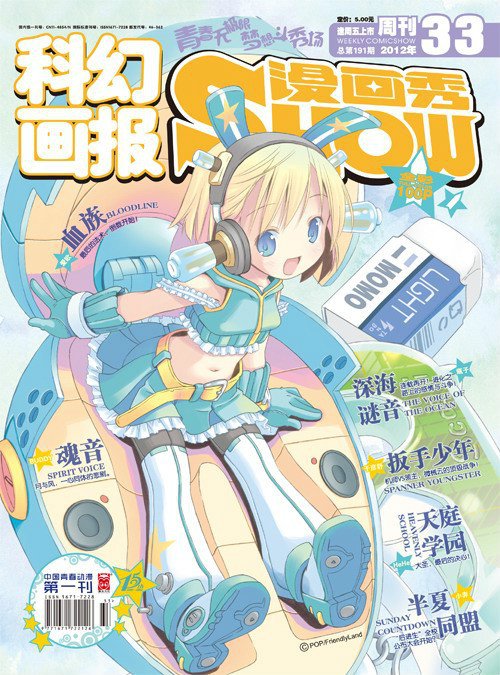
A physical comics magazine market existed in China with magazines like Manyou and Manhua Show but like in Korea it was not too big and it struggled to expand. Like Korea as well, the spread of the internet across China gave way for platforms like Dongmanzhijia and then Youyaoqi in the 2000s. These made success with original webcomics most notably Youyaoqi. The success of these comic platforms and the greater expansion of the internet and the introduction of smartphones in the 2010s in China meant new names came into the party such as huge corporation Tencent, with AC.QQ or Tencent Animation and Comics. Tencent used its full power to not only bring Japanese comics to its side but also korean webtoons and it brought over a 'wait and get it free' monetisation model from Korea and of course, it's bigger size meant it could court domestic authors from the smaller Youyaoqi. This is probably the biggest difference from Korea when it comes to the Chinese webcomic market, Japanese comics held and still hold a lot of popularity but they were widely read digitally through pirated platforms and Tencent and other platforms opened up legal ways to read these foreign popular series.
 
Manhua Show - A magazine with Original Chinese works influenced by Japanese works

Kuaikan came into the game later than AC.QQ but its approach was more similar to the Korean companies when it came to creating a platform that was aimed at mobile phones. It had a streamline interface and the community aspect similar to Korean apps. it also focused more on domestic works, at first it had a much larger female user base but that gradually evened out as it invested more and more upcoming domestic cartoonists and exclusivity contracts. So it reaped and sowed a great deal of promising domestic cartoonists and it grew to hold the best of the best when it came to domestic works exclusively. These exclusivity contracts with cartoonist or comic studios is the great source of fierce competition between different competitors companies in the webcomic business, Kuaikan ranks first in this of course with a 53% rate which is more than twice that of the second place Tencent. Gradually, the comic fans that read Japanese works had begun to read domestic ones as well and overall the consumer base of webcomics increased a lot in recent years in China.


Kuaikan - literally Quickly Read


Bilibili comics came much later in 2018 but it did not build its own platform, instead it bought out Netease comic division that was created in 2015. Netease was a medium sized platform with a lot of japanese works from a lot of different publishers but it also had many domestic works. It was brought out by Bilibili and it was expanded its catalog of works and now it competes with Kuaikan and Tencent for exclusivity contracts with promising and well known domestic cartoonists.

Why is this rise of webcomics from Korea and China relevant? The biggest relevance is its competition with Japanese comics and of course anime. The maturation of the webcomic market has been fast and these companies have begun to move to broaden their works into other multimedia projects like TV series, animation, games and so on. Korean webcomics have been adapted into drama, both for their own market but also sometimes for netflix like Sweet Home. South Korea has an audience for animation but it's not as prominent as in Japan, and its anime industry which is prominent works mainly in the backstages of production from Japan and the west. However, the recent animation for Tower of God, God of High School and Noblesse made things a lot more interesting. Naver/Webtoon was a producer alongside other Japanese companies. Naver becoming interested in seeing their shows animated especially as anime becomes bigger for western audiences is not a surprise, the really interesting aspect was the interest in the Japanese side.

Webcomics have actually grown significantly in Japan, Naver entered the market with Line, a manga reading app for mobile phones that included a lot of Japanese works but also many of the popular Korean works like the ones I just cited. Line became the most popular comic application in Japan, the biggest comic market in the world. But Line lost that title to Piccoma, an application that started in 2016. Piccoma was Kakao entry into the Japanese market and whilst at first things were slow as it leaned more on Japanese works to begin in, when it began to bring its most popular webcomics from Korea together with its 'free if you wait model' it spiked in sales to absurd levels. A notable title was Solo Levelling which became the most popular series in the app. A large part of this was that there was an increasing popularity of digital manga reading in Japan but they still had the standard comic style that felt a bit more awkward to read in mobile phones and tablets. The webcomics from Korea and China brought over in Piccoma had the scrolling style which paired with the app clean interface and monetisation scheme that favoured quick reading that was perfect for the 'snack culture'. Hence, Piccoma now sees its sales match big Japanese publishers and it has begun attracting Japanese authors to publish webcomic in its platform rather than the still large print manga industry. In addition, it has also made other publishers like Kadokawa to try and make vertical reading versions of their manga. In a sense, the old traditional monochrome manga industry in Japan has found itself maybe under competition with webcomics but there is still a space for monochrome webcomic in the standard Japanese style and that is shown by the success of Jump+, a digital platform spinoff from the most popular manga magazine in Japan. It publishes many titles and it has given rise to big titles like Kaijuu 8 recently, but unlike Piccoma, it still focuses on the sale of physical volume releases of its series.

The rising popularity of webcomics from Korea in Japan will mean more anime adaptations of Korean works will be coming in the future. Funnily enough these series are completely localised with the name of characters and setting changing to Japan if necessary. China has, however, begun to adapt its own work into anime. After all, China is a huge market for anime. Hence, the Chinese companies Kuaikan, Tencent and Bilibili whilst they at first co produced stuff with Japanese like 'The Outcast' a big Tencent title, it has backed away from that and turned inward with its own studios handling the animation production nowadays. I doubt there will be a turn away to Japan again, so we will be seeing the best chinese comic animated as Chinese production. Do not be surprised to see webcomics like Solo Levelling, Retry get games, live action and animation in the future.

Some interestings links -

.https://barnettcenter.osu.edu/sites/default/files/2019-08/webtoon_as_a_new_korean_wave.pdf

https://journals.sagepub.com/doi/full/10.1177/2056305119880174

https://doi.org/10.2991/assehr.k.201215.523

https://news.yahoo.co.jp/special/manga-changing/

A Brief History of French Animation

France is an interesting country for many reasons but in regards to the one thing we care about: manga and anime it is a particularly a note...